


BNMT participation in the 54th Union World Conference on Lung Health, Paris

This year, Birat Nepal Medical Trust (BNMT Nepal) participated in the 54th Union World Conference on Lung Health held in Paris, France. Bhola Rai delivered an oral presentation on the ASCOT study, titled “Addressing the Social Determinants and Consequences of TB in Nepal,” to the global TB academic community. The ASCOT project, funded by the Medical Research Council (MRC, UK), piloted the feasibility and acceptability of three different socioeconomic support interventions for TB-affected households in Nepal. The study aimed to generate robust evidence to support a funding application for a large-scale trial of effectiveness. Key Informant Interviews and Focus Group Discussions were used to evaluate aspects of feasibility and acceptability with stakeholders, including National TB Control Programme personnel, people with TB, health workers, the ASCOT project team, and study participants. The support package, which combined both social and economic support, showed optimal feasibility and acceptability among TB-affected households. Cash transfers facilitated participation in social support activities and helped mitigate catastrophic costs for families affected by TB. The study also included TB peer support clubs, which were highly successful and are now being continued at two study sites: Gaushala Primary Health Centre in Mahottari district and Patharisanischhare Municipality in Morang district.
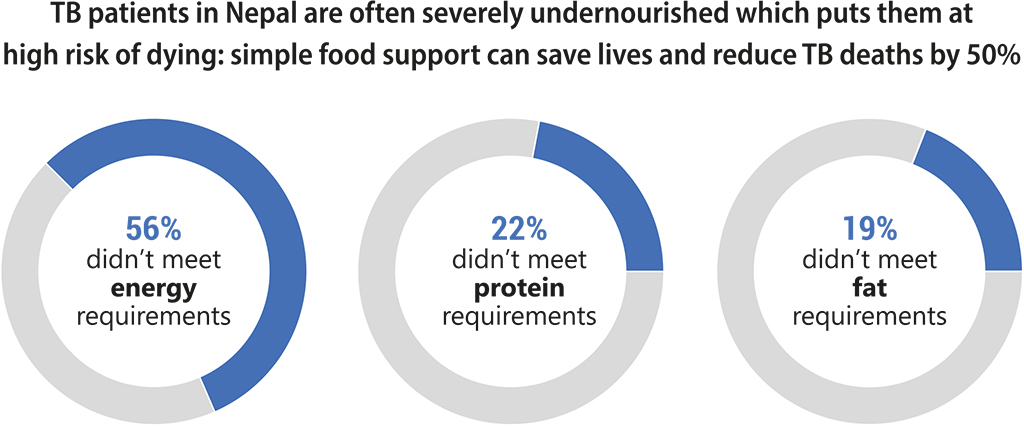
Additionally, Bhola presented a poster on the TB RECOVERY project, which assessed the dietary intake and nutritional status of people with pulmonary tuberculosis in Morang district, Nepal. The study measured nutritional status, evaluated the gap between recommended energy intake and actual dietary intake during treatment, and explored barriers and facilitators to accessing and consuming nutritious food. The findings revealed that 70% of participants were underweight, over half were unable to meet the recommended minimum calorie intake, 22% lacked the minimum protein requirements, and 19% did not consume the recommended fat intake.
The study underscored the need for locally appropriate food support for individuals with poor socioeconomic conditions, alongside integrated nutrition education programs. These findings emphasize the urgent need for interventions to address under nutrition and inadequate dietary intake among people with TB in Nepal. The results will inform the design of effective nutritional support for those affected by TB in Nepal. BNMT continues this work through the NOURISH project.
News & Events
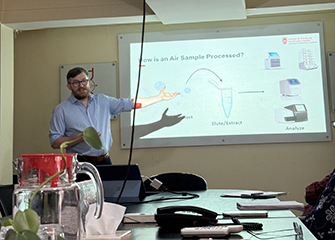 Timothy Locksmith from University of Wisconsin Visit to Nepal
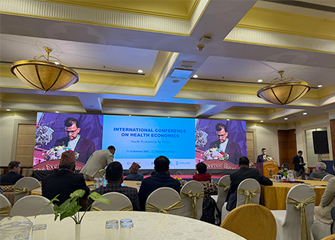 International Conference on Health Economics 2025
Stories

From Learning to Leading: Alina’s Impactful Journey with BNMT Project HORIZON
My name is Alina Adhikari, and I live in Sindhupalchowk District. I am currently in my final year of my master’s studies. I worked as a community health supervisor for the Horizon project at BNMT from 1st Feb, 2022 -...